Want to grow your family tree using DNA evidence?
DNA testing adds a scientific layer to genealogy, helping you confirm family tree details, find new relatives, and overcome gaps in historical records. Here’s what you need to know:
Key Points:
- Types of DNA Tests:
- Autosomal DNA: Broad ancestry view from both parents. Great for finding relatives. Starts at $79.
- Y-DNA: Male-only test for paternal lineage. Starts at $119.
- Mitochondrial DNA: Tracks maternal lineage. Costs around $159.
- Top DNA Testing Companies:
- AncestryDNA: Best for relatives and document research.
- 23andMe: Includes health insights and family tree predictions.
- FamilyTreeDNA: Specialized in Y-DNA and mtDNA for lineage tracing.
- Privacy Tips:
- Use strong passwords and enable two-factor authentication.
- Opt-out of data sharing with law enforcement if preferred.
- Review privacy policies for each company.
Quick Comparison Table:
| Test Type | Purpose | Cost | Best For |
|---|---|---|---|
| Autosomal DNA | Broad ancestry, both parents | $79 | Finding relatives, ethnic origins |
| Y-DNA | Direct paternal line (males) | $119 | Paternal haplogroups, male ancestors |
| Mitochondrial DNA | Direct maternal line | $159 | Maternal ancestry |
DNA testing is a powerful tool to uncover your family history. Start with the right test, secure your data, and connect with relatives to build a richer family tree.
Getting Started with DNA Testing
DNA Testing Companies
When it comes to building your family tree, picking the right DNA testing service is a key step. Here’s a quick comparison of the three major players in genealogical DNA testing:
| Company | Key Features | Best For |
|---|---|---|
| AncestryDNA | Offers Ancestry Hints and ties to historical records | Finding relatives and document research |
| 23andMe | Provides automated family tree predictions and health insights | DNA-based tree building |
| FamilyTreeDNA | Includes Y-DNA and mtDNA testing options | Specialized lineage tracing |
FamilyTreeDNA stands out for its focus on Y-DNA and mtDNA testing, which is ideal for tracing direct paternal or maternal lines. They also exclude certain medical markers from autosomal tests, ensuring the analysis stays focused on genealogy.
Once you’ve chosen a service, follow the guidelines below for accurate sample collection.
DNA Sample Collection Steps
Getting reliable results starts with proper sample collection. Follow the steps provided by your testing company carefully. They may include:
- Avoid eating, drinking, or smoking for 30 minutes before swabbing.
- Swab the inside of your cheeks for 30 seconds, using a rolling motion to collect cheek cells rather than saliva. Other tests involve spitting in a tube.
- Let the swab air-dry for 60 seconds, then place it in the provided paper envelope.
DNA Test Privacy Guide
Protecting your genetic information is just as important as collecting it. The recent 23andMe breach, which exposed data from 7 million users, highlights the importance of securing your DNA data. Here’s how to keep your information safe:
- Use strong, unique passwords for your DNA testing accounts.
- Enable two-factor authentication whenever possible.
- Store raw DNA data only on devices that are secure and password-protected.
The Genetic Information Nondiscrimination Act (GINA) offers some protection, preventing employers and insurers from misusing your genetic data. Additionally, states like Arizona, New York, and California have enacted their own laws to safeguard genetic privacy.
"Our genetic data is not something we can change if it’s stolen, like as a credit card number, so protecting this information is crucial."
– Leah Larkin, The DNA Geek
Review each company’s privacy policies before committing. For example, FamilyTreeDNA allows users to opt out of sharing their data with law enforcement, giving you more control over how your information is used.
Once your sample is collected and your privacy measures are in place, you’re ready to dive into your DNA results and uncover your family history.
Reading Your DNA Results
Using DNA Test Websites
If you’ve taken a DNA test, platforms like AncestryDNA and 23andMe make it easy to dive into your results. Here’s how to navigate their features:
- On AncestryDNA:
- The dashboard shows your ethnicity estimates front and center.
- Use the "DNA Matches" tab to explore connections with relatives.
- Organize these matches by family lines with their colored dot system.
- On 23andMe:
- The "DNA Relatives" section helps you find genetic connections.
- Sort your matches by how closely related they are.
- Filter results based on the percentage of shared DNA.
These tools are designed to simplify your exploration of genetic relationships and heritage.
DNA Ethnicity Results
Ethnicity estimates are fascinating but require a critical eye. As Jonathan Marks explains:
"People need to realize that genomics companies are a mix of science and corporate hucksterism. You need to think about the difference between the product they are selling, and the product you are buying."
For example, AncestryDNA offers detailed insights into European and African-American ancestry but may lack precision in East and South Asian heritage. Some regions, like Northwest Europe and England, are grouped together, which can blur distinctions.
Also, keep in mind that results showing less than 2% for a particular ethnicity are often unreliable. Once you’ve reviewed your ethnicity breakdown, focus on organizing your DNA matches to uncover family connections.
Finding DNA Matches
Your DNA matches generally fall into three groups:
- Immediate Family: These are your closest relatives, sharing a large amount of DNA.
- Close Relatives: They share a moderate amount of DNA. Use tools like Smart Matches™ at MyHeritage to compare family trees and overlapping surnames.
- Distant Cousins: These matches share smaller amounts of DNA. Look for shared ancestral surnames or geographic origins, using ethnicity estimates for additional context.
As one expert puts it:
"What’s important to understand is that genetics can guide answers about ancestry. There’s no time machine, no crystal ball."
For deeper analysis, consider uploading your DNA data to GEDmatch. This platform allows you to compare results across different testing services, offering more advanced tools for exploration.
Building Trees with DNA Evidence
Adding DNA Data to Family Trees
To incorporate genetic evidence into your family tree, start by uploading your raw DNA data to genealogy platforms. Here’s how to get started:
- Download your raw DNA file from your testing provider.
- Save secure backup copies of your DNA data.
- Upload your data to multiple platforms to increase the chances of finding matches.
Make sure to document DNA-based connections in your family tree. Use notes and tags to clearly differentiate between genetic confirmations and traditional research findings. Once you’ve added DNA information, focus on reaching out to your DNA matches to verify and strengthen these connections.
Working with DNA Matches
Reach out to your closest DNA matches and compare family trees to identify shared ancestors. This process builds on your earlier DNA research and helps deepen the accuracy of your family tree.
To make the most of this step, try the following:
- Review shared matches to identify common connections.
- Compare surnames and locations to spot patterns.
- Use the platform’s messaging tools to exchange research details and collaborate.
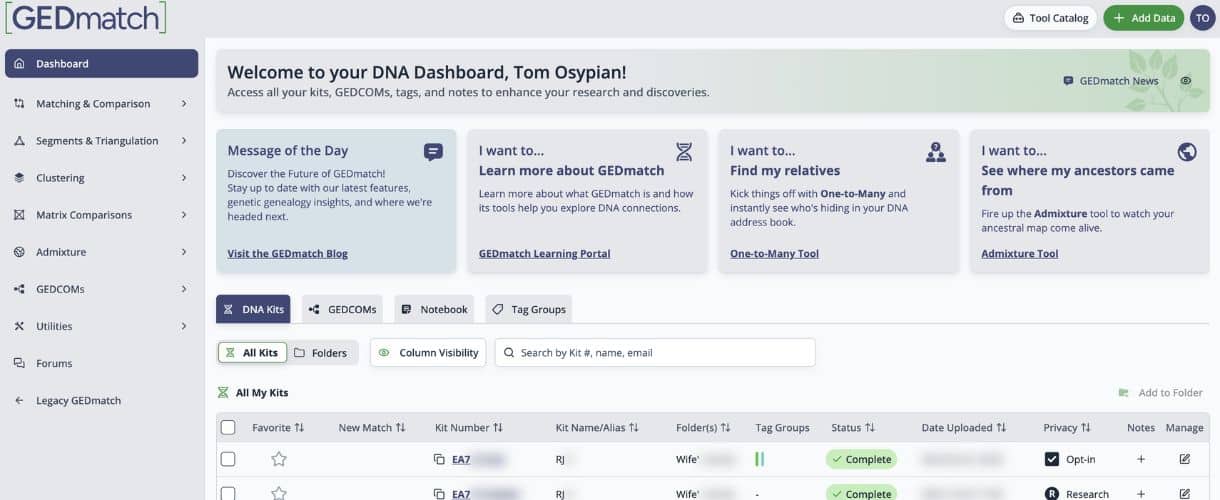
GEDmatch: DNA Analysis Tools
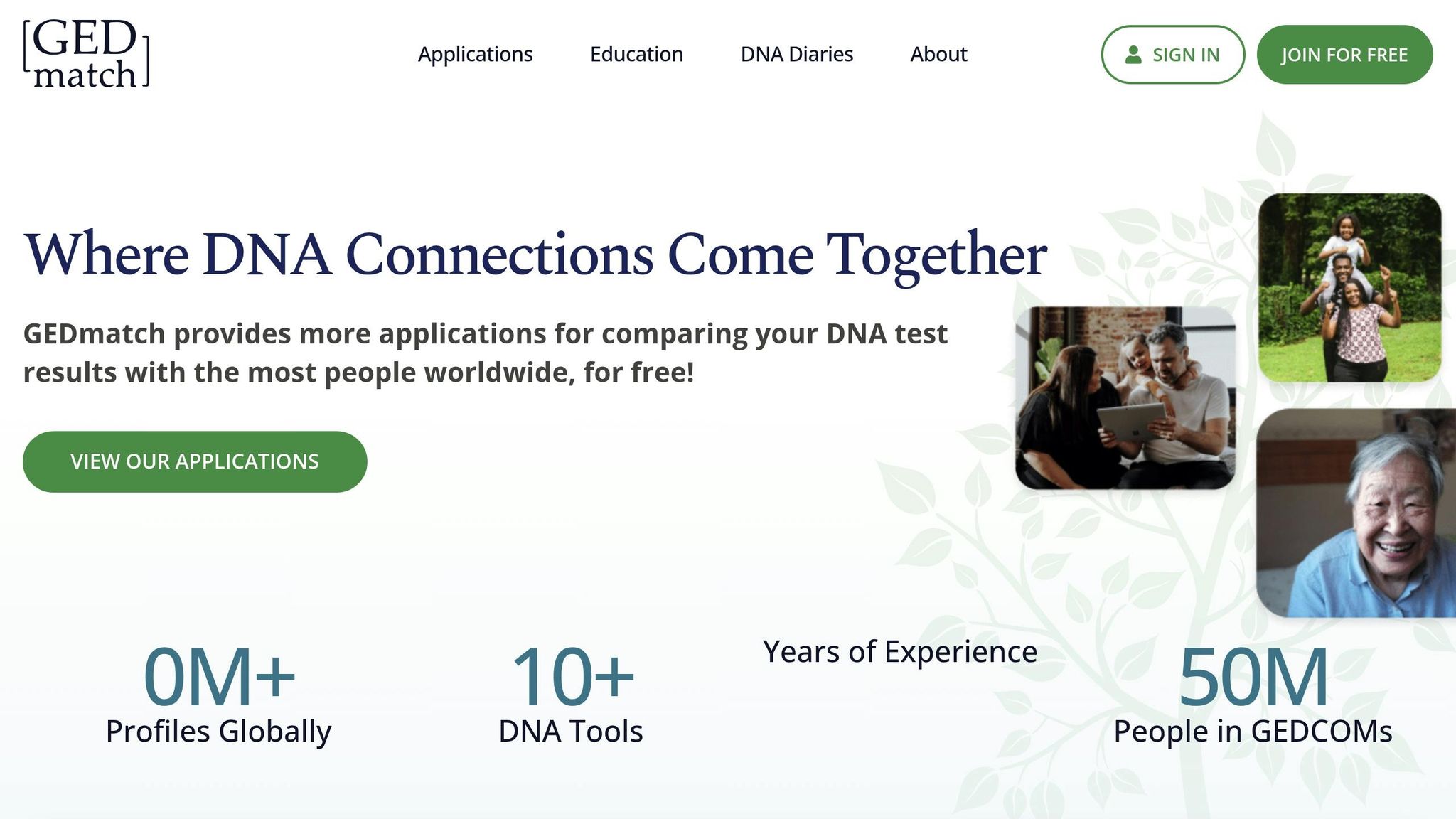
GEDmatch is a powerful tool for analyzing DNA data across different testing companies. It offers features that help validate and explore genetic connections further, making it a valuable resource for genealogical research.
Key tools include:
- One-to-Many DNA Comparison: Discover matches from various testing companies.
- One-to-One Autosomal Comparison: Pinpoint the exact amount of shared DNA with a match.
- Admixture Analysis: Explore detailed ancestry estimates based on biogeographical data.
"GEDmatch offers a free DNA site built for genetic genealogy research. With a global database of autosomal DNA data and unmatched utility, we make this data accessible and effective."
The platform provides free basic tools, with premium options available for those seeking more advanced analysis features.
sbb-itb-65d4ad3
AncestryDNA Shared Matches to Solve Genealogy Research Questions

Common DNA Research Problems
DNA testing can bring its own set of challenges, but addressing them carefully is key to successful family research.
Handling Surprise DNA Results
Unexpected DNA findings can reshape your family story. If you come across surprising results, here are some steps to consider:
- Reach out to support groups: Seek help from genetic genealogy groups that specialize in unexpected DNA outcomes.
- Consider professional counseling: A counselor can help you process any emotional reactions to the findings.
- Document your discoveries: Keep detailed notes on unexpected results for future reference.
"Information concerning living persons should be treated with appropriate discretion." – International Association of Jewish Genealogical Societies (IAJGS)
Taking these steps can help you navigate initial surprises and prepare for more complex research challenges.
Solving DNA Research Blocks
When DNA matches are limited or progress slows, a systematic approach can help break through research barriers.
Building Evidence Networks
- Look into shared matches among genetic cousins to trace connections to unresolved lines.
- Build family trees for DNA matches to pinpoint common ancestors.
- Combine DNA data with traditional records like deeds, tax rolls, or court documents to strengthen your findings.
Research Strategies
- Keep detailed research logs to organize your evidence.
- Regularly review and update your information.
- Reach out to extended family members for additional insights or context.
DNA Research Ethics
Ethics play a crucial role in handling surprises and overcoming research blocks. Following ethical practices ensures privacy and trust.
Privacy Protection
- Always get clear consent before sharing DNA results.
- Keep details about living individuals private.
- Honor privacy settings and sharing limits chosen by DNA testers.
"Genealogists respect all limitations on reviewing and sharing DNA test results imposed at the request of the tester… genealogists do not share or otherwise reveal DNA test results… or other personal information… without the written or oral consent of the tester." – Genetic Genealogy Standards
Ethical Guidelines
- Be transparent about how family information will be used.
- Record consent for sharing or publishing personal details.
- Think carefully about the impact on living family members before sharing sensitive discoveries.
- Follow the ethical codes set by recognized genealogical organizations.
Genetic genealogy involves real people and relationships. By approaching your research with care and respect, you can maintain trust within the genealogy community while safeguarding the privacy of everyone involved.
Next Steps
Basic DNA Research Tips
Keep your DNA research organized and well-documented with these simple strategies:
- Maintain Detailed Research Logs
Use tools like Google Sheets or Airtable to track your progress. Log DNA matches, family tree connections, shared match reports, and source citations. - Use Consistent Formatting
Stick to a standard format for your records. For example, use MM/DD/YYYY for dates, write locations as Town, County, State, Country, and include full source citations.
Once you’ve nailed the basics, you’ll be ready to dive into more advanced tools and methods.
Advanced DNA Research
Take your research to the next level with these advanced approaches:
- Leverage Advanced Tools
Explore tools like chromosome browsers, autocluster reports, and segment triangulation to uncover deeper genetic links. - Tap into Community Expertise
Join platforms like GEDmatch, RootsChat.com, or Family Tree Forum to connect with experienced researchers.
"GEDmatch offers comprehensive tools to compare your DNA test results internationally, free of charge."
- Invest in Specialized Software
Consider tools like Evidentia to streamline source organization, manage citations, and analyze evidence more effectively.