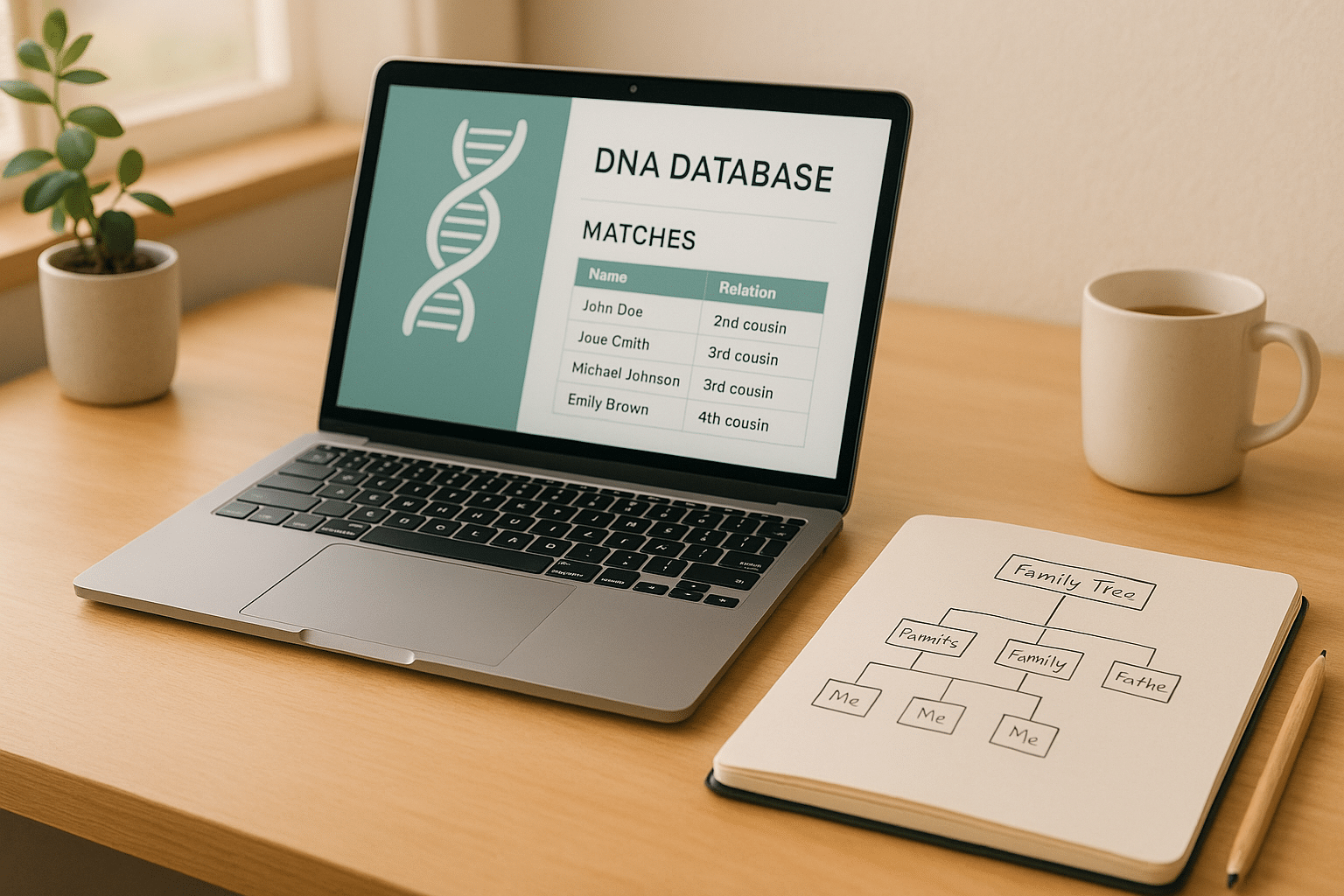

Want to organize your DNA matches and uncover family connections? Manual DNA clustering is a hands-on method to group genetic matches based on shared DNA and ancestors. Here’s why it matters and how to get started:
- Why Manual Clustering?
- Full control over the process.
- Combine data from multiple DNA companies.
- Learn genealogy skills while organizing matches.
- What You’ll Need:
- DNA test results (e.g., AncestryDNA, 23andMe).
- Spreadsheet software like Excel or Google Sheets.
- Tools like GEDmatch for advanced analysis.
- How It Works:
- Organize data in a spreadsheet (e.g., match names, shared DNA, known relationships).
- Use the Leeds Method to color-code and group matches.
- Refine clusters with tools like GEDmatch for segment analysis.
Quick Tip: Start small by focusing on close matches (higher shared DNA) and work your way out to distant connections.
Ready to build your family tree? Keep reading for detailed steps, tools, and techniques to master manual DNA clustering.
Setting Up Your Match Data
Getting your DNA match data organized is a key step in clustering. Here’s how to prepare your data for analysis.
Creating Your Spreadsheet
Set up a spreadsheet with the following columns:
| Column Name | Purpose | Example Data |
|---|---|---|
| Match Name | Identifier | J. Smith |
| Testing Company | Source platform | AncestryDNA |
| Shared cM | Amount of shared DNA | 125 cM |
| Match Group | Clustering category | Group A |
| Known Relationship | Verified connection | 2nd Cousin |
| Notes | Additional information | Matches mother’s side |
If you’re working with data from multiple sources, consider creating separate worksheets for each testing company or match group. This keeps everything organized and easy to navigate.
Important Match Details
When collecting match data, focus on these key points:
Primary Details:
- Shared DNA (cM)
- Estimated relationship
- Shared matches
- Known family connections
Secondary Details:
- Family trees
- Geographic locations
- Ethnicity estimates
- Contact information
For GEDmatch users, include the kit numbers of your matches. This makes referencing and comparing data much simpler during clustering.
Once your match data is organized, you’re ready to explore the Leeds Method for clustering.
Leeds Method Step-by-Step

Leeds Method Basics
The Leeds Method helps you visually group DNA matches into family clusters using color coding. This approach makes it easier to see genetic connections and trace distinct family branches.
Color-Coding Your Matches
Start by assigning a specific color to a key DNA match. If other matches seem connected to this person, use the same color for them. For matches that aren’t linked, assign new colors. Once you’ve color-coded your matches, look for patterns that might point to family groups.
Finding Family Groups
When the color coding is complete, you’ll notice clusters forming. Each cluster typically represents a different family branch. If a match shows up in more than one color group, it could mean overlapping family lines or intermarriages. Matches that don’t fit into any group might indicate distant connections.
To dig deeper, tools like GEDmatch can compare shared DNA segments. These tools might uncover hidden relationships between groups. Documenting each group’s shared traits – like surnames, locations, time periods, or known ancestors – can help you piece together your family history more effectively.
sbb-itb-65d4ad3
Advanced Clustering Methods
Building on the Leeds Method, these advanced techniques help refine and confirm your DNA clusters for more accurate results.
Shared Match Analysis
By focusing on shared matches across multiple DNA tests, you can verify relationships and discover new connections. Pay special attention to matches with a high amount of shared DNA, as they are more likely to indicate close relationships.
Clusters with multiple shared DNA links strengthen the likelihood of a relationship. If a match appears in several clusters, it could point to overlapping family branches.
Tools like GEDmatch’s One-to-Many DNA Comparison tool can assist in identifying these patterns. For further confirmation, review individual DNA segments to ensure accuracy.
DNA Segment Review
GEDmatch’s One-to-One Autosomal DNA Comparison tool provides detailed information about DNA segments, helping you validate your clusters.
Key factors to assess include:
- Segment Size: Larger segments often signal closer relationships.
- Distribution: Segments spread across several chromosomes can indicate broader connections.
- Overlap: Shared segments in the same locations among matches can confirm relationships.
Reviewing these details reduces errors and boosts confidence in your family groupings.
Addressing Endogamy
Endogamy, where interrelated matches are common, can make clustering tricky. Here’s how to manage it:
- Adjust Thresholds: Prioritize matches with higher shared DNA amounts to filter out weaker connections.
- Combine with Traditional Records: Use GEDmatch tools alongside genealogical records for a fuller picture.
- Form Subgroups: Break clusters into smaller groups based on location or time period to address overlaps.
- AutoCluster Endogamy: This Tier 1 tool cluster, designed for those with endogamous matches, clusters your matches together
GEDmatch is particularly helpful for navigating endogamy, as it allows comparisons across different testing companies and provides tools tailored to complex genetic relationships. These strategies can help you tackle even the most intricate family connections.
Using Cluster Results
Connecting Clusters to Ancestors
Identify how clusters align with ancestors by focusing on shared surnames, geographical locations, and generational patterns. Tools like GEDmatch’s comparison features make it easier to find links across different DNA testing platforms. When examining clusters, pay attention to:
- Overlapping locations tied to ancestral origins
- Common surnames within the cluster
- Generational distances
- DNA segment sizes, which indicate how closely related individuals are
These connections can sometimes uncover entirely new branches of your family tree.
Finding New Relatives
With GEDmatch’s extensive global database, you can uncover previously unknown family connections by analyzing shared DNA amounts. The Admixture tool is particularly helpful for comparing biogeographical ancestry, making it an excellent resource for matches from various ethnic backgrounds.
"GEDmatch offers a free DNA site built for genetic genealogy research. With a global database of autosomal DNA data and unmatched utility, we make this data accessible and effective." – GEDmatch
Merging DNA Data with Traditional Records
Combining genetic cluster analysis with historical records provides a more solid foundation for confirming relationships. GEDmatch supports this process by enabling users to:
- Compare DNA results across multiple platforms
- Validate relationships through segment analysis
- Build family trees using both genetic and documentary evidence
- Cross-check records with DNA data for added accuracy
Using GEDmatch’s tools to verify relationships suggested by traditional records helps reinforce findings and tackle challenging research obstacles. This combined approach ensures stronger and more reliable family connections.
GEDmatch Tools for Clustering
GEDmatch offers specialized tools to help refine your manual DNA clustering efforts.
GEDmatch Basic Tools
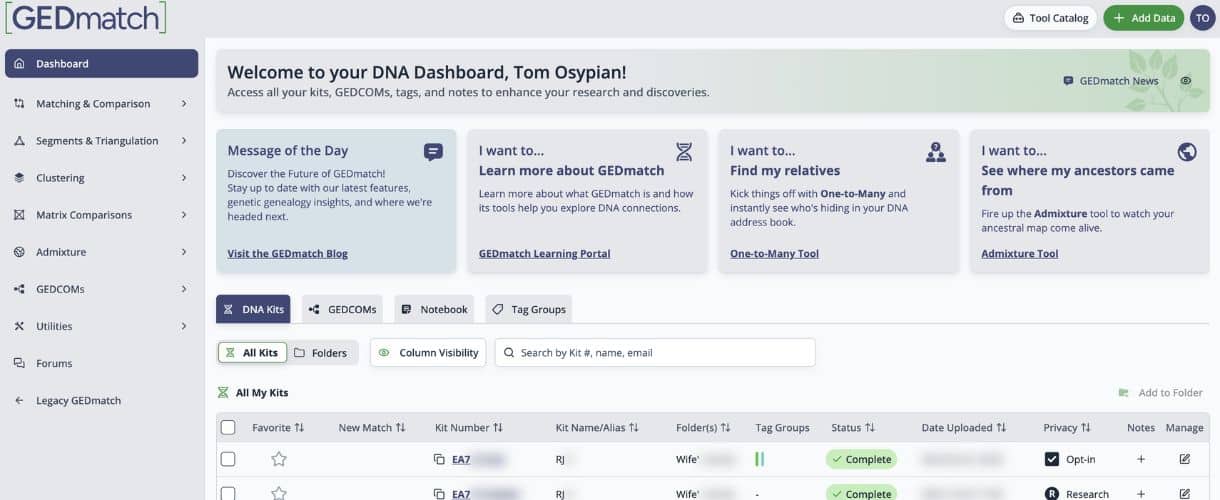
GEDmatch simplifies the clustering process with its range of tools. Start with the One-to-Many DNA Comparison tool, which displays matches from its database of over 1 million profiles. This is particularly helpful for identifying possible relatives who may have tested with different DNA companies.
The One-to-One Autosomal DNA Comparison tool allows you to analyze shared DNA segments between two individuals, confirming genetic relationships. For exploring ancestral origins, the Admixture tool groups matches based on heritage, making it easier to trace diverse family backgrounds. With these tools ready to use, setting up your data on GEDmatch is simple.
The Clusters with AutoTree tool automatically sorts your matches into clusters based on shared DNA between your matches. This tool helps you visualize the various subsets of matches on your list, allowing you to take a closer look at your clusters of interest.
DNA Upload Guide
Here’s how to get started with GEDmatch’s clustering tools:
- Get Your Raw DNA Data
Download your raw DNA file from your testing service. GEDmatch supports files from all major DNA testing providers. - Create a GEDmatch Account
Sign up for a free account on GEDmatch.com. This account gives you access to the essential clustering tools. - Upload Your DNA File
Follow the instructions in the upload section to add your DNA data. Once uploaded, your file is ready for analysis.
GEDmatch Advantages
GEDmatch offers features that make it a standout option for manual DNA clustering, especially when compared to individual testing companies. Its global database allows you to match DNA across platforms, giving you access to a larger pool of potential relatives.
Here are some of the key benefits:
| Feature | How It Helps with Clustering |
|---|---|
| Cross-Platform Matching | Compare DNA results from different testing providers |
| Advanced Segment Analysis | Dive deeper into shared DNA segments |
| Global Database | Access a wide range of profiles for broader comparisons |
| Free Basic Tools | Use clustering features at no cost |
These tools and features make GEDmatch a powerful resource for confirming relationships and discovering new connections in your genetic research.
Wrap-Up and Future Steps
Main Points Review
Manual DNA clustering helps organize and understand genetic connections. When paired with modern tools, it broadens the possibilities for tracing ancestry. This guide has covered techniques to uncover meaningful insights from DNA matches.
Effective clustering depends on a structured and methodical approach. Using comparison tools across platforms allows for better cross-referencing of matches.
| Clustering Component | Benefit |
|---|---|
| Manual Organization | Control over match grouping |
| Cross-Platform Analysis | Wider access to potential matches |
| Segment Mapping | Verifies relationships in detail |
| Advanced Tools | Identifies patterns more effectively |
With these tools and methods in mind, you can take steps to refine and expand your research.