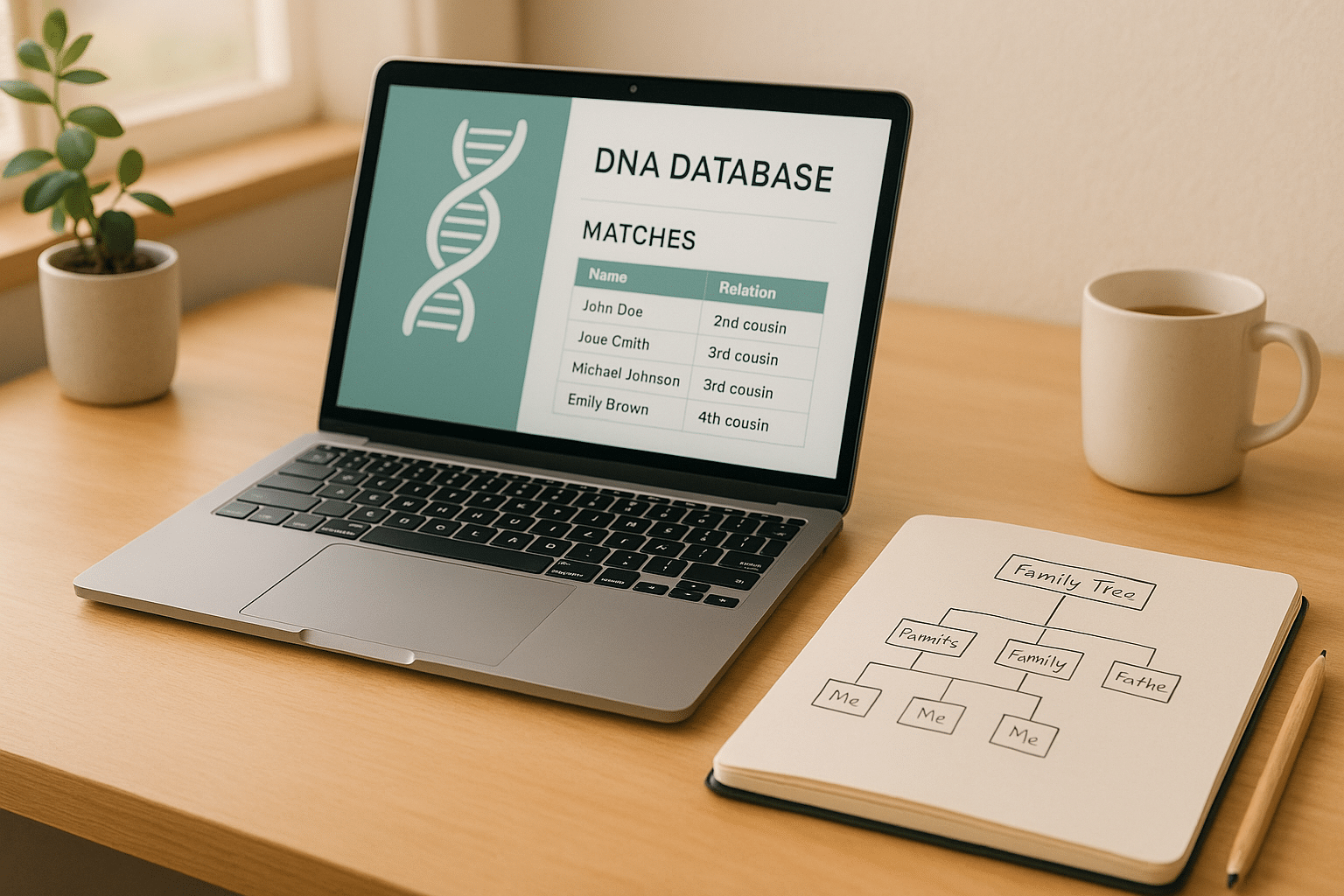

DNA match analysis helps you uncover family connections by examining shared DNA, measured in centimorgans (cM). For example, 3,400 cM indicates a parent-child relationship, while 229 cM points to a second cousin. This guide simplifies the process into 5 key steps:
- Understand genetic concepts: Learn about centimorgans, DNA match types (autosomal, Y-DNA, mtDNA), and how to interpret relationship probabilities.
- Use analysis tools: Platforms like AncestryDNA, MyHeritage, and GEDmatch offer features like clustering, chromosome browsers, and cross-platform comparisons.
- Organize matches: Sort DNA matches by shared cM, group them using methods like the Leeds Method, and validate relationships with tools like DNA Painter.
- Build family trees: Combine DNA data with traditional records to trace ancestry and verify connections.
- Handle unexpected results: Use tools like WATO (What Are The Odds?) to evaluate relationship scenarios and clarify unknown matches.
Quick Tip: Focus on matches with over 400 cM for closer relatives. Use tools like GEDmatch for cross-platform analysis and chromosome browsers for segment comparison. Always document findings to stay organized.
Analyzing DNA matches takes patience and careful research, but it can reveal connections traditional records miss. Let’s break it down further.
Make the Most of Your Match List

DNA Match Core Concepts
To make sense of genetic data, understanding a few key principles is crucial. These concepts lay the groundwork for interpreting DNA matches effectively.
Understanding Centimorgans (cM)
Centimorgans (cM) measure the amount of DNA shared between individuals. A higher cM value typically means a closer biological relationship. Here’s how it breaks down for common family connections:
| Relationship | Average Shared cM | Typical Range |
|---|---|---|
| Parent/Child | 3,400 | 2,900-3,700 |
| Full Sibling | 2,550 | 2,100-3,000 |
| Grandparent | 1,700 | 1,300-2,200 |
| First Cousin | 880 | 540-1,300 |
These numbers can vary due to the randomness of genetic inheritance. This variability plays a key role in methods like the Leeds Method and chromosome analysis, which will be covered later.
DNA Match Types: Autosomal, Y-DNA, mtDNA
Different DNA tests uncover unique aspects of your ancestry:
- Autosomal DNA (atDNA): This test looks at DNA from all 22 pairs of chromosomes, revealing information about both maternal and paternal lines over about 5-6 generations.
- Y-DNA: Focuses on the direct paternal line and is available only to males.
- Mitochondrial DNA (mtDNA): Tracks the direct maternal line through DNA passed from mothers to all their children. Both males and females can take this test.
Reading Relationship Probability Charts
The Shared cM Project, created by Blaine Bettinger, is widely used to estimate relationships based on shared DNA.
Key Points to Keep in Mind:
- Overlapping Ranges: Some relationships, like a grandparent and a half-sibling, may share similar cM values (around 1,700 cM). Additional context, such as family trees or shared matches, is needed to clarify the relationship.
- Endogamous Populations: In populations with high intermarriage rates (e.g., Ashkenazi Jewish or French Canadian), cM values can appear inflated. Specialized charts for these populations can help refine the analysis.
When analyzing relationships, consider multiple factors beyond cM values, such as shared matches and family tree connections. Segments smaller than 7 cM are often coincidental and less reliable.
These concepts set the stage for organizing and interpreting your DNA matches, which will be discussed in the next section.
How to Analyze Your DNA Matches
Now that you know the basics, let’s dive into how to review your DNA matches effectively. This involves carefully sorting through your match list and organizing the details to uncover meaningful family connections.
Sorting Matches by Shared DNA
Start by sorting your matches based on the total shared cM using the filters available on your DNA testing platform. Focus on matches with more than 400 cM, as these are likely to be second cousins or closer relatives. This list will act as your guide for identifying key ancestral links.
Grouping Matches into Clusters
Use the Leeds Method to organize your matches into four groups, each representing one of your grandparental lines. Assign a unique color to each group and include matches who share DNA with others in the same group. This step often results in four distinct clusters, making it easier to trace connections to your grandparents.
Visualizing DNA with Chromosome Browsers
Chromosome browsers are great tools for confirming shared DNA segments. For example, MyHeritage’s browser lets you compare up to seven matches at once, making it easier to spot overlapping segments that confirm relationships.
If you’re working across platforms:
- Upload your DNA data to GEDmatch.
- Use the "One-to-One" comparison tool.
- Exclude segments smaller than 7 cM.
Pay attention to segment size, location, and triangulation patterns. Overlapping segments among multiple matches often point to a shared ancestor and can help validate family groupings.
Keeping Track of Key Details
Document important information for each match, such as shared cM, surnames, locations, and cluster colors. This helps connect raw genetic data to real family ties, paving the way for building your family tree in the next steps.
sbb-itb-65d4ad3
DNA Analysis Tools
Once you’ve organized your matches, these tools can help you dive deeper into your DNA analysis:
DNA Platform Comparison
Each major DNA platform offers different features for analyzing matches. Here’s a quick breakdown:
| Platform | Best For | Unique Tools |
|---|---|---|
| AncestryDNA | Building family trees | ThruLines, Genetic Communities |
| MyHeritage | Cluster analysis | AutoClusters, Theory of Family Relativity |
| 23andMe | Health insights | DNA Relatives, Ancestry Composition |
GEDmatch Cross-Platform Analysis
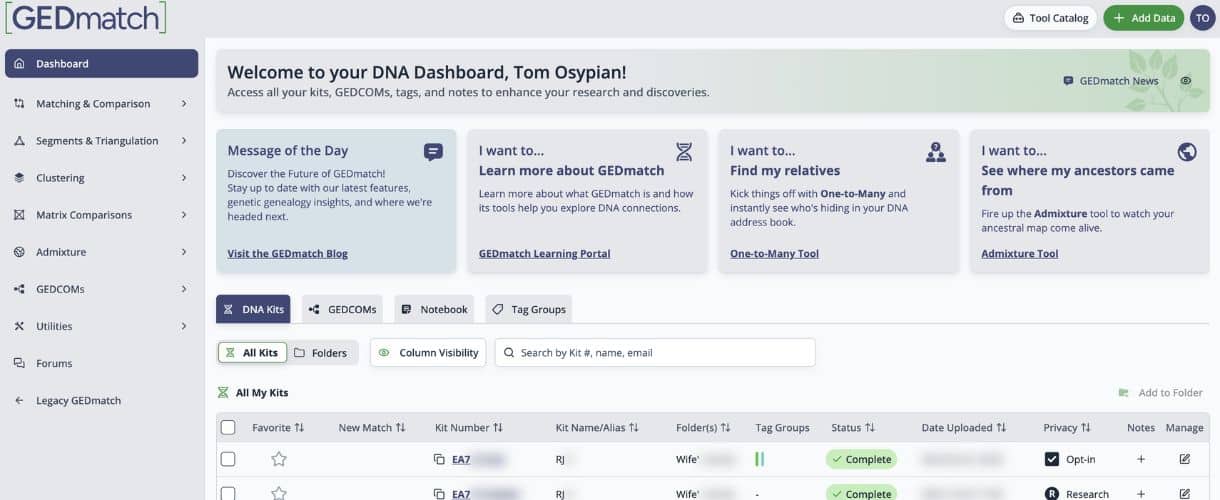
If you’re working with matches from multiple DNA services, GEDmatch is a game-changer. It allows you to compare results across platforms using features like:
- One-to-Many Matching: Compare your DNA with entries from all participating databases.
- Ethnicity Comparisons: See how different services estimate your ancestry.
- Paid Features: Includes tools like Lazarus with ancestor DNA reconstruction for more advanced insights.
GEDmatch is especially helpful for combining data from platforms that don’t normally interact.
DNA Segment Analysis
Third-party tools, such as DNA Painter, are excellent for visualizing how DNA is inherited. When analyzing segments, focus on large shared segments and groups of matches sharing identical DNA. These often point to shared ancestors.
Key areas to focus on during segment analysis:
- Segment Size: Larger shared segments typically indicate closer relationships.
- Inheritance Patterns: Track how segments are passed down through generations.
Triangulated groups – where three or more people share the same DNA segment – are especially useful for identifying common ancestors. Tools like DNA Painter make this process much easier to understand and map out.
Creating Family Trees with DNA Evidence
Combining DNA and Records
Once you’ve organized your DNA matches using clustering tools or chromosome browsers, it’s time to merge this genetic information with traditional research.
Start by verifying DNA matches with close relatives you already know. This helps establish a reliable starting point. Then, cross-reference vital records with the family trees of your shared matches. Pay special attention to shared matches – they often reveal clusters of relatives connected to a common ancestor.
Handling Unexpected DNA Results
Unexpected matches can be puzzling, but a structured approach can help. First, confirm the match is accurate by comparing the shared cM amount to the expected range for the relationship. Use your cluster groupings, such as those from the Leeds Method, to pinpoint which family branch needs further investigation.
Create a research tree for unknown matches to uncover possible connection points. Keep detailed notes at every step to ensure your process stays clear and organized.
Using WATO Analysis
If documentary evidence leaves gaps, tools like DNAPainter’s WATO (What Are The Odds?) can help assess relationship probabilities based on shared cM data and family connections.
To get the most out of WATO:
- Input shared cM values from your key matches.
- Compare different relationship possibilities.
- Focus on hypotheses with the highest probability scores.
“[WATO is} A free tool that uses an easy, mathematical approach to figuring out where someone belongs in a tree..
Summary and Next Steps
DNA match analysis is a process that evolves over time. As databases expand, it’s essential to revisit your matches and refine your approach.
After using methods like WATO analysis and other tools, consider these strategies to improve your skills:
- Join communities and diversify platforms: Engage with groups like ISOGG and upload your data to various platforms. This broadens your reach and increases your chances of finding meaningful matches. Keep track of your progress with dated notes about key matches and hypotheses.
- Stay organized: As your match list grows, maintain clear and detailed records of your findings to avoid confusion later on.
Keep up with new tools and technology. DNA analysis platforms are starting to use AI-based tools for relationship predictions and tree building. These tools can help uncover patterns in your genetic connections that might not be immediately obvious.
When dealing with unexpected results, it’s crucial to maintain ethical standards by:
- Respecting the privacy preferences of your matches.
- Ensuring your genetic data is secure.
- Being mindful of how unexpected discoveries might affect living relatives.
For those looking to deepen their expertise, consider exploring specialized resources or attending genealogy conferences. These can provide advanced techniques for tackling complex genetic relationships.
Finally, don’t forget to revisit earlier matches as new tools and insights become available. Over time, patterns often become clearer with better analysis and experience.